 RuView
 is an MIT-licensed sensing system that turns ordinary WiFi signals into spatial awareness without cameras or wearables: it detects people, tracks movement and estimates breathing and heart rate room by room, even through walls and in the dark. It runs on low-cost ESP32 hardware, exposes presence and vitals to Home Assistant, Apple Home, Google Home and Alexa through MQTT, HAP or Matter, and ships an AI toolkit and trained models for building your own sensing apps.
Updated
✨ Try AgentScout's free AI image generator →Good for: automating workflows, building AI agents, data analysis, evaluating agents
Use cases
About RuView
RuView is listed in our robotics & physical AI category and is aimed at builders. RuView is an MIT-licensed sensing system that turns ordinary WiFi signals into spatial awareness without cameras or wearables: it detects people, tracks movement and estimates breathing and heart rate room by room, even through walls and in the dark. It runs on low-cost ESP32 hardware, exposes presence and vitals to Home Assistant, Apple Home, Google Home and Alexa through MQTT, HAP or Matter, and ships an AI toolkit and trained models for building your own sensing apps. Pricing, as the maker states it: Open source. Maturity: Mature. We last checked the official link on 2026-11-15.
RuView at a glance
- Category: Robotics & physical AI
- Built for: Developers and teams building with AI agents
- Pricing: Open source (as the maker states it)
- GitHub: ruvnet/RuView · 104,343 stars (as of Nov 15, 2026)
- Official site: cognitum.one
- Listed on AgentScout: Nov 15, 2026
RuView FAQ
What is RuView?
RuView is an MIT-licensed sensing system that turns ordinary WiFi signals into spatial awareness without cameras or wearables: it detects people, tracks movement and estimates breathing and heart rate room by room, even through walls and in the dark. It runs on low-cost ESP32 hardware, exposes presence and vitals to Home Assistant, Apple Home, Google Home and Alexa through MQTT, HAP or Matter, and ships an AI toolkit and trained models for building your own sensing apps.
How much does RuView cost?
RuView's pricing, as the maker states it: Open source. Open-source tools are free to use, though you may still pay for model API usage or a hosted plan. Check the official site for current plans.
Where can I find RuView's source code?
On GitHub at ruvnet/RuView, which had 104,343 stars as of Nov 15, 2026.
What are alternatives to RuView?
Similar tools include Lamp + lampOS, Open Reality, Bubbaloop, ROS MCP Server, Viam and RPent.
Facts from our link-checked listing, the GitHub repository and the official site. See something wrong? Suggest an edit.
RuView ratings and reviews
Be the first to rate RuView: tap 1 to 5 stars below. A written review is optional.
RuView alternatives
Other robotics & physical AI tools in our directory. See all robotics & physical AI tools →
Lamp + lampOS
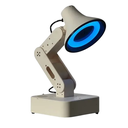
Lamp is Autonomous's fully assembled desktop companion robot, and lampOS is the open-source (Apache-2.0) operating system it runs. Lamp has a camera, microphones, a speaker, motors and lights; you talk to it, give it a voice and personality, and add physical and digital skills, while lampOS lets agents such as Hermes, Claude Code, Codex, OpenClaw, OpenCode and PicoClaw see, hear, speak and move through it, with a cloud or compatible local model. Lamp costs $699 and Lamp Pro, which adds CO2, particle, temperature and humidity sensing, $999.

Open Reality
Turns a handheld phone video into a persistent, queryable 3D scene and exposes it to Claude Code, Codex or Cursor through an MCP server: agents can measure distances and angles, plan paths through scanned free space and export LeRobot, GR00T, Isaac Sim or MuJoCo training data. BSD-2-Clause, self-hostable or hosted.

Bubbaloop
Kornia's open-source single-binary agent runtime with an MCP server that orchestrates cameras, sensors and robots on Jetson, Raspberry Pi or Linux through chat.

ROS MCP Server
Connects Claude and other models to ROS robots.

Viam
Software platform for building and operating robots and smart machines.

RPent
RPent is agentic infrastructure for the physical world, connecting language agents to embodied systems